Home
Finding the China best Martindale abrasion testing machine supplier requires more than comparing online prices. Textile laboratories, furniture manufacturers, and quality departments need dependable results under repeated rubbing cycles. A reliable Martindale Abrasion Testing Machine should provide stable pressure, consistent motion, accurate cycle counting, and clear test records.
China has many experienced equipment manufacturers, but supplier quality varies. Some factories specialize in textile testing instruments. Others mainly trade products from different sources. This difference affects customization, calibration support, spare parts, and delivery reliability. Details matter. Claims need proof.
A professional supplier should explain applicable methods, including ISO 12947 and related textile testing requirements. They should share technical specifications, factory information, inspection records, and realistic lead times. Product videos can help, but they cannot replace a live demonstration or sample test. Ask how the machine handles specimen mounting, load selection, abrasive replacement, and endpoint assessment. These details influence repeatability.
Experience also matters during installation. Operators should receive practical guidance, not only a digital manual. A trustworthy supplier can discuss calibration intervals, maintenance routines, and common operating errors. Their engineers should answer technical questions clearly and acknowledge equipment limitations. No machine is perfect.
Buyers should evaluate total ownership cost, including shipping, training, verification, consumables, and after-sales service. The lowest quotation may become expensive when support is slow. Independent customer references add confidence, although they should be checked carefully. A careful comparison can identify a China supplier that offers credible performance, responsive service, and measurable value for long-term abrasion testing work.
What Is a Martindale Abrasion Testing Machine?
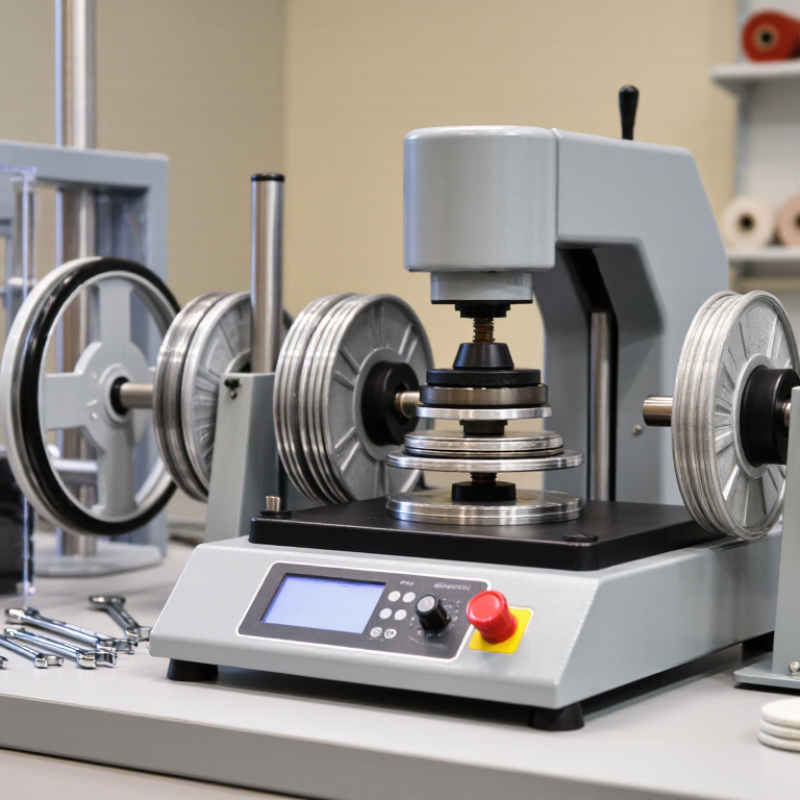
A Martindale abrasion testing machine evaluates how fabric surfaces withstand repeated rubbing. It holds circular specimens against a standard abradant and moves them in a multi-directional Lissajous pattern. The operator sets the test pressure and abrasion cycles, then checks for yarn breakage, surface wear, or other agreed failure criteria. In simple terms, it turns everyday friction into a controlled laboratory test.
ISO 12947-2:2016 describes methods for determining specimen breakdown in Martindale tests. ISO 139:2005 specifies a standard textile-testing atmosphere of 20 ± 2°C and 65 ± 4% relative humidity. Conditioning matters: a damp or unusually dry fabric may behave differently under rubbing. Small details count.
The result is usually reported as cycles to a defined endpoint, not as a universal score of fabric quality. Test pressure, abradant, specimen preparation, and endpoint all affect interpretation. A high cycle count can help compare fabrics tested under the same conditions, but it does not guarantee identical performance in every chair, garment, or cleaning routine. That limitation is easy to overlook. For dependable comparisons, laboratories should document the method and settings alongside the result.
| Topic | Verified Information | What to Check When Selecting a Machine |
|---|---|---|
| What the machine does | A Martindale abrasion tester assesses the resistance of textile specimens to rubbing. It can also be used for pilling and related surface-change tests when configured for the applicable method. | Confirm that the instrument supports the specific test method and specimen type required by your laboratory. |
| How abrasion testing works | A specimen is rubbed against an abrasive material in a repeating Lissajous motion. The test is run for a specified number of cycles or until a defined endpoint is reached. | Check that the motion, holders, abrasive materials, and test procedure match the standard you need to follow. |
| Common test standards | ISO 12947 is a series of methods for determining the abrasion resistance of fabrics by the Martindale method. ASTM D4966 covers Martindale abrasion testing of textile fabrics. | Ask which editions of the standards the machine and its operating instructions are designed to support. The laboratory is responsible for following the applicable edition. |
| Test pressure | Test pressure depends on the method and intended textile application. Nominal pressures such as 9 kPa and 12 kPa are used in some Martindale procedures; they are not interchangeable without checking the method. | Verify the available loading options and the supplied weights. Confirm the required pressure in the standard or customer specification. |
| Test endpoint | Depending on the method, results may be based on cycles to fabric breakdown, mass loss, or a specified visual assessment. Different endpoints measure different aspects of performance. | Ensure the counter and test setup support the required endpoint. Define inspection intervals and acceptance criteria before testing. |
| Pilling assessment | Martindale equipment may be used for pilling tests under a separate procedure, such as ISO 12945-2. Pilling results should not be treated as abrasion-resistance results. | Check for the appropriate pilling holders, specimens, abradant arrangement, and evaluation procedure if pilling tests are required. |
| Abrasive materials | Test methods specify the required abrasive material and, where applicable, an underlay. Abrasive condition and replacement requirements can affect results. | Check the consumables list, material specifications, replacement guidance, and availability of suitable specimen and abrasive supplies. |
| Machine capacity | Commercial instruments are available with different numbers of test stations. Capacity affects how many specimens can be tested at the same time, but does not by itself establish test accuracy. | Choose station capacity based on workload, sample throughput, available laboratory space, and the need to test multiple conditions in parallel. |
| Counting and operation | A cycle counter records the test progress. Programmable settings and automatic stopping features vary by instrument configuration. | Review counter readability, setting limits, stopping behavior, operator controls, and the clarity of the operating instructions. |
| Calibration and verification | Reliable results depend on correct loading, maintained equipment, suitable consumables, and documented laboratory procedures. Calibration or verification requirements depend on the quality system and test method. | Request documentation for inspection, maintenance, and verification. Confirm that the laboratory can establish traceability where required. |
| Supplier evaluation | A suitable supplier should provide clear technical specifications, operating documentation, training information, and support for spare parts and consumables. | Compare written specifications, compliance documentation, warranty terms, service response, delivery scope, and after-sales support rather than relying on a general “best supplier” claim. |
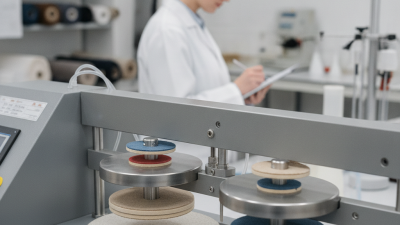
The Martindale test measures how well fabric resists repeated rubbing. A circular specimen is mounted in a holder and pressed against a standard abrasive fabric. The machine moves it in a changing, looping path, so contact occurs from several directions. Technicians inspect the specimen at set intervals for yarn breakage, holes, or visible surface wear. Small details matter.
ISO 12947-2:2016 specifies the specimen-breakdown method and uses different nominal pressures for different fabric applications: 9 kPa for clothing fabrics and 12 kPa for upholstery fabrics. These figures show why results need context; a high rub count under one condition is not directly comparable with a result from another.
ISO 12947-4:2016 addresses appearance changes, including pilling, which may be assessed separately from fabric breakdown. The test does not reproduce every real-world factor, such as washing, sweat, or sharp objects. That limitation is easy to overlook. For useful comparisons, record the pressure, abrasive material, test endpoint, and specimen preparation alongside the reported cycles. A careful laboratory report makes the number more meaningful, though judgment during visual inspection can still vary.
When comparing Martindale abrasion testing machine suppliers in China, look beyond the quoted price. Check whether the machine supports the test methods and specimen sizes your laboratory uses. Confirm the applied load, abrasion motion, cycle counter, and specimen holders match your requirements. Ask for calibration records and a sample test report. Clear documentation matters. So does repeatability.
Tips: Request a live demonstration using your own fabric. Watch how specimens are clamped and how the cycle count is recorded. Ask how quickly common wear parts can be supplied.
A careful supplier should explain setup, maintenance, and operator training in plain terms. Compare the warranty, response time, spare-part availability, and support language. If possible, test the same fabric on two machines and compare the results. Small differences may come from setup, not machine quality, so ask how testing conditions are controlled. A polished brochure is useful, but it cannot replace practical evidence. Some details are easy to overlook—especially service after delivery. That deserves a second look.
ISO 12947-2 test procedures use nominal pressures of 9 kPa for clothing fabrics and 12 kPa for upholstery fabrics. When comparing suppliers in China, check that the machine supports the pressure required for your material and that its loading system can be calibrated. Confirm the applicable test method for your product.
Reference: ISO 12947-2. Values shown are nominal test pressures.
Choosing the best Martindale abrasion testing machine supplier requires more than comparing prices. Buyers should request evidence of ISO 12947 compliance and relevant ASTM D4966 procedures. Textile Exchange’s Materials Market Report 2024 reported 124 million metric tons of global fiber production in 2023. It projects approximately 160 million tons by 2030. This growth makes reliable abrasion data increasingly important. Ask for calibration certificates, measurement uncertainty, raw test records, and serial-numbered inspection history. Not just a certificate.
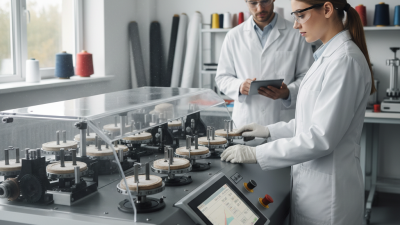
During a factory audit, observe the machine testing your own fabric. Check the counter, loading weights, specimen holders, motion, and automatic stopping function. A reliable supplier should explain how operators prevent uneven pressure or loose samples. Ask whether control fabrics compare results between machines. ISO/IEC 17025 principles can strengthen laboratory verification, but machine certification alone does not prove laboratory accreditation. This distinction is often overlooked. Test it yourself.
Support quality must be measurable. Request written response times, remote diagnosis procedures, spare-parts availability, software update rules, and training details. Ask for a sample test report before placing a large order. The report should identify fabric preparation, load, endpoint, conditioning, and operator details. Independent user references are useful, but they are not enough. A polished demonstration can still hide weak after-sales support. Buyers should also check whether technical staff understand fabric construction, not only buttons and settings. No supplier is flawless. A careful evaluation should leave room for small mistakes, documented corrections, and follow-up verification.
Martindale abrasion testing machines serve many industries that depend on durable fabrics. Furniture manufacturers test upholstery before sofas enter showrooms. Automotive suppliers examine seat covers, door panels, and headliner materials. Clothing producers use the method for uniforms, workwear, and performance garments exposed to repeated rubbing.
It is a practical test.
Carpet and interior textile companies also use Martindale equipment to compare surface wear. Hospitality businesses often request abrasion data for hotel chairs, curtains, and decorative fabrics. Footwear and bag manufacturers may test coated textiles, linings, and synthetic leather. These results help engineers select suitable materials, not merely attractive ones.
Reliable testing requires careful preparation. Technicians condition specimens, check the abrasive fabric, set the correct pressure, and record each cycle. Common procedures may follow recognized standards, such as ISO 12947 or ASTM D4966, depending on the product and market. A dependable supplier should provide stable motion, clear controls, repeatable loading, and accessible calibration support. Small errors matter. A loose specimen or worn abrasive surface can change the result. Even experienced operators should review unusual wear patterns instead of accepting every number immediately. Martindale results also cannot predict every real-life failure; sweat, dirt, sunlight, seams, and washing may affect performance. That limitation deserves attention when industries turn laboratory data into purchasing decisions.