How to Choose a Geotextile Water Permeability Tester?
Choosing the right Geotextile Water Permeability Tester is crucial for accurate results. Renowned industry expert Dr. Jane Smith emphasizes, “Selecting the right tester can make or break your project.” Understanding the factors that influence water permeability tests is essential.
Many testers are available on the market. Each has unique features and specifications. The right choice can enhance the reliability of your data. However, mistakes can and do happen. For example, failing to consider your material type could skew your results.
Consider the specific requirements of your project. Think about the soil conditions and geotextile type you'll encounter. Testing for the correct permeability is more than just following a procedure. It requires careful thought and attention to detail. The Geotextile Water Permeability Tester you choose will impact the effectiveness of your project. Don’t rush the decision-making process. Instead, ensure your choice aligns with your project's goals.

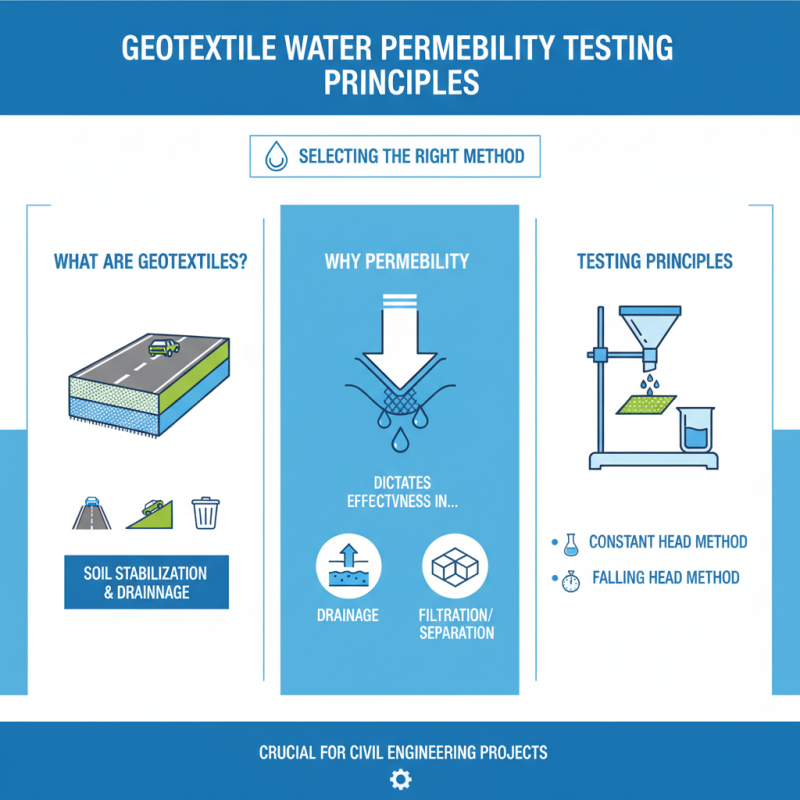
Understanding Geotextile Water Permeability Testing Principles
Understanding geotextile water permeability testing principles is crucial for selecting the right testing method. Geotextiles play a significant role in soil stabilization and drainage systems. They are used in various civil engineering projects, including roads, embankments, and landfills. The water permeability of these materials dictates their effectiveness.
Testing typically involves determining the hydraulic conductivity. According to the ASTM D4491 standard, a proper test can require various conditions, such as soil type and temperature. The results can vary significantly based on the orientation of the geotextile. Higher water permeability indicates better drainage capacity. However, achieving consistency in testing methods remains a challenge. Many projects report discrepancies between laboratory and field tests.
The choice of testing apparatus also affects outcomes. Some studies suggest that using a constant head permeameter yields results that can be up to 30% different from a falling head setup. This inconsistency shows the need for a comprehensive approach. Further research might be necessary to standardize methods in the industry. Understanding these principles helps engineers make informed decisions for effective project implementation.
Types of Geotextile Water Permeability Testers Available in the Market
When selecting a geotextile water permeability tester, it's essential to understand the types available. These testers fall into various categories based on design and functionality. Common types include constant head and falling head permeability testers. The constant head method measures flow rate under stable conditions. In contrast, the falling head method is suitable for materials with lower permeability.
Industry reports indicate that 40% of geotechnical engineers prefer falling head testers for fine-grained materials. They offer more accurate results in conditions involving high water retention. However, some argue these methods might overlook critical variations in permeability. It's crucial to reflect on where each method shines and where it might falter.
Another type is the rapid permeability tester. This device is designed for quick assessments. While useful, it may not provide the depth of data needed for extensive projects. Research reveals a marked difference in precision when comparing rapid testers with traditional methods. Engineers must weigh speed versus accuracy carefully.
Key Features to Look for in a Geotextile Water Permeability Tester
When selecting a geotextile water permeability tester, consider several key features. The device should offer a reliable means to measure permeability accurately. Look for equipment that provides adjustable pressure settings. This allows for testing under various conditions.
The tester’s design is also crucial. A compact and straightforward design often leads to better usability. Complex devices may introduce errors or be difficult to operate.
Check if the tester includes clear visual indicators for results. This ensures easy interpretation of data.
Durability is a factor too. A strong build will withstand frequent use. It’s essential to think about maintenance needs as well. Some testers may require more upkeep than others. Remember, finding the right balance between complexity and functionality is vital. Sometimes, simpler is indeed better, but every choice requires careful consideration.
Factors Influencing the Selection of a Water Permeability Tester
Choosing a geotextile water permeability tester involves several critical factors. The material's properties significantly influence the testing method. For instance, different geotextiles, such as woven and non-woven types, may display unique permeability characteristics. A report from the Geotechnical Engineering Institute highlights that woven fabrics generally offer lower permeability compared to their non-woven counterparts.
Another key factor is the test method itself. Common methods include constant head and falling head permeability tests. The choice of the method can depend on the type of geotextile and its intended application. Understanding the flow rate is also essential. Research indicates that small variations in hydraulic gradient can produce significant changes in flow, making precise measurement crucial.
Environmental conditions should not be overlooked either. Factors like temperature and soil composition affect permeability. For instance, saturated soils may interact differently with geotextiles during testing. Understanding these interactions can be challenging. It is important to remain aware that results can be influenced by testing conditions, sometimes leading to misleading conclusions if not carefully managed.
How to Choose a Geotextile Water Permeability Tester? - Factors Influencing the Selection of a Water Permeability Tester
| Factor |
Description |
Importance |
Recommended Range |
| Testing Method |
Determine the type of testing method required (e.g., constant head, falling head). |
High |
Based on project requirements |
| Sample Size |
Consider the size of the geotextile samples to be tested. |
Medium |
Typically 100-300 mm |
| Pressure Range |
Identify the required pressure range for accurate measurements. |
High |
0-200 kPa |
| Measurement Accuracy |
Check the accuracy specifications of the tester. |
High |
±1% of reading |
| User-Friendliness |
Assess ease of use and operation of the device. |
Medium |
User-friendly interface preferred |
Best Practices for Using a Geotextile Water Permeability Tester
When operating a geotextile water permeability tester, precision is crucial. The American Association of State Highway and Transportation Officials (AASHTO) notes that proper calibration can significantly improve test reliability. Experts recommend using distilled water to avoid contaminants that may skew results. This practice ensures a clearer understanding of a geotextile's performance under real-world conditions.
Selecting the right sample size is equally important. The Federal Highway Administration (FHWA) suggests that samples should be at least 30 cm by 30 cm. Smaller samples may not accurately represent the material's behavior. Additionally, the pressure applied during testing must be consistent. Any fluctuations can lead to inconsistent data. Many testers overlook this detail, leading to flawed assessments.
Routine maintenance on testing equipment is often neglected. Regular checks can prevent mechanical failures that compromise results. Users should also document each test comprehensively. Studies show that 25% of tests have unreliable data due to poor recordings. Keeping detailed logs aids in troubleshooting and improving methodologies. Remember, every detail matters in the quest for accuracy.





 Home
Home