How to Choose the Right Cof Testing Equipment for Your Needs?
Choosing the right Cof Testing Equipment is crucial for any project. It can be overwhelming with so many options available. The right tools can significantly affect accuracy and efficiency.
Cof Testing Equipment is essential for assessing various materials. Different needs require different specifications. You might find it challenging to identify which equipment suits your requirements. Consider the specific tests you need to perform. Do you prioritize portability, size, or advanced features?
Understanding your needs before making a decision is vital. Many users rush into choices and later realize their mistakes. Reflect on what you truly require. Research various options carefully. Finding the perfect Cof Testing Equipment can lead to better results and save time in the long run.
Understanding the Importance of Cof Testing Equipment in Industry
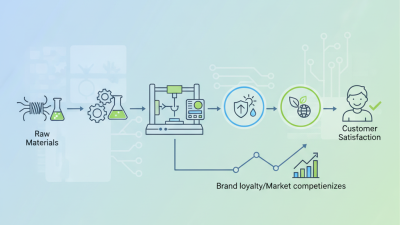
Cof testing equipment plays a crucial role in various industries. This equipment helps ensure that materials meet specific standards. Accurate testing can prevent failures in products. It impacts safety, efficiency, and reliability. Industries rely on these tests to maintain quality control. Manufacturers understand that poor testing can lead to severe consequences. Unexpected failures could result in costly recalls or legal issues.
Choosing the right equipment is not always straightforward. Not all testing devices are suitable for every need. Some might lack the sensitivity required for precise measurements. Others may be too complex for basic applications. Users should be cautious about overspending on features they won't use. Reflecting on past experiences can guide better decisions. Realizing what works and what doesn't is essential for improvement.
Incorporating feedback from staff can enhance the selection process. Their hands-on experiences may highlight deficiencies in current testing practices. This insight can lead to better choices in new equipment. Ultimately, understanding the importance of cof testing equipment means investing wisely. It's about balancing quality control with the right tools for the job.
Key Factors to Consider When Selecting Cof Testing Equipment
Choosing the right COF testing equipment can be challenging. There are several key factors to think about. One major consideration is the type of material you’ll test. Different materials may require different testing methods. Understanding your material properties can guide your equipment choice. Testing needs can vary greatly, and you must match equipment to your application.
Another factor is accuracy and sensitivity. High precision is often necessary for reliable results. Look at the specifications closely. If your equipment is not sensitive enough, results may be skewed. This can lead to poor decision-making in your projects. Also, consider the ease of use. Complicated systems may lead to errors in operation. Knowledge of the user interface is essential.
Budget is another element that cannot be ignored. High-quality equipment often comes at a high price. However, investing in the right tools can save money in the long run. Don’t overlook maintenance costs, either. They can add up over time. Reflect on your current testing workflow. Improvements can often be made by selecting the right equipment, but only if you truly understand your needs.
COF Testing Equipment Performance Comparison
This bar chart compares the static COF values of different testing equipment models, which is essential for understanding their performance in various applications. It helps in making an informed decision when selecting COF testing equipment.
Types of Cof Testing Equipment and Their Applications in Various Sectors
Choosing the right COF testing equipment can be challenging. Several types exist, each tailored for specific applications across industries. For instance, some devices are designed for the packaging sector. These assess the slip and friction properties of materials. This is crucial for ensuring packages slide smoothly during production and transport.
In the automotive industry, particular equipment measures the friction levels of various components. Adequate friction is vital for safety. However, without proper testing, performance reliability may suffer. Testing may also vary based on temperature or material composition. This variability can lead to unexpected results.
In electronics, COF testing ensures components maintain their integrity under movement and pressure. Equipment designed for these tests often prioritizes precision. Developers need to carefully analyze which features are essential for their needs. Misunderstanding these requirements can lead to poor equipment choices. The nuances in each sector highlight the importance of tailored testing solutions.
How to Choose the Right Cof Testing Equipment for Your Needs?
| Type of Cof Testing Equipment |
Application Sector |
Features |
Typical Use Cases |
| Thermal Cof Testing Equipment |
Electronics |
High precision temperature control |
Testing electronic components under thermal stress |
| Mechanical Cof Testing Equipment |
Construction |
Durability and load response |
Analyze structural integrity of materials |
| Environmental Cof Testing Equipment |
Aerospace |
Resilience under varying conditions |
Test materials against different environmental factors |
| Chemical Cof Testing Equipment |
Pharmaceutical |
Chemical stability testing |
Assessing the stability of drugs and compounds |
Industry Standards and Regulations Impacting Cof Testing Equipment Selection
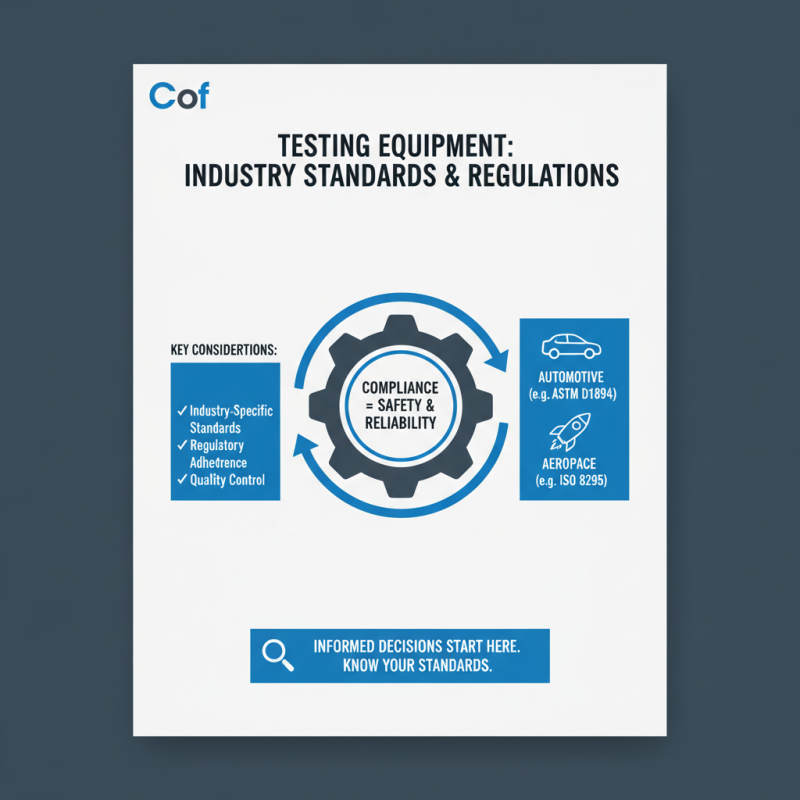
When selecting Cof testing equipment, industry standards and regulations play a crucial role. Compliance with these guidelines ensures that your testing methods meet safety and reliability benchmarks. Different industries, such as automotive or aerospace, may have unique requirements. Understanding the specific standards related to your field is vital for making informed decisions.
Tips: Research the latest regulations relevant to your industry. Keep abreast of changes to standards, as they may affect equipment performance and legality.
Certain certifications can enhance your equipment choices. For instance, looking for equipment that meets ISO standards can provide an assurance of quality. However, make sure to thoroughly review the testing criteria. Misunderstandings regarding these standards can lead to purchasing unsuitable equipment.
Tips: Create a checklist of key features that align with compliance needs. This will help in comparing different devices effectively.
Lastly, consider the long-term implications of your equipment choice. Equipment that meets current regulations might not stay relevant as technology and standards evolve. Regular assessments of your equipment against changing regulations are necessary.
Tips: Schedule routine evaluations of your tested methods and equipment. This practice helps ensure ongoing compliance and operational efficiency.
Evaluating Performance Metrics: Accuracy, Precision, and Reliability in Testing
When selecting cof testing equipment, understanding performance metrics is vital.
Accuracy measures how close test results are to the true value.
Precision, on the other hand, evaluates consistency in repeated measurements.
Reliability ensures equipment performs consistently under varied conditions, which is crucial for dependable results.
A recent industry report indicates that equipment with an accuracy rate above 95% is preferred in many labs.
Equipment that offers high precision, often within 1% variance, is essential for reliable data.
When evaluating options, consider how each device handles noise, environmental factors, and calibration processes.
In practice, these metrics can significantly influence outcomes.
Tip: Regularly calibrate equipment to maintain optimal accuracy and precision.
Some users find their devices struggle under certain conditions, highlighting the need for a comprehensive evaluation.
Factors such as temperature fluctuations can impact results.
Equipment that seemed reliable in initial tests may not perform well in different environments.
It's essential to reevaluate testing needs periodically.
Tip: Review performance data from multiple labs to ensure your choice meets diverse requirements.
In conclusion, focusing on these performance metrics will guide you toward informed decisions.
It’s crucial to recognize potential shortcomings in equipment and continually seek improvements.
Balancing accuracy, precision, and reliability can optimize your testing outcomes.





 Home
Home