Top Cof Testing Equipment Trends in 2026 What to Expect
As we move towards 2026, trends in Cof Testing Equipment are evolving rapidly. The demand for precision and efficiency in testing processes is on the rise. According to a recent industry report by Market Research Future, the global market for testing equipment is expected to reach USD 25 billion by 2026, growing at a CAGR of over 8%. This growth indicates a significant shift in how companies prioritize quality assurance in their manufacturing processes.
One notable trend is the increasing integration of automation in Cof Testing Equipment. Automated systems reduce human error and enhance accuracy. However, transition challenges remain. Many companies struggle to keep pace with technological advancements, leading to wasted resources and inefficiencies. Furthermore, the focus on sustainability in testing processes is gaining traction. Manufacturers are looking for eco-friendly solutions that minimize waste while delivering reliable results.
In conclusion, the landscape of Cof Testing Equipment is transforming. Companies need to adapt and consider the impact of emerging trends on their operations. Balancing innovation with practical implementation will be crucial for success in this evolving market.

Emerging Technologies in Cof Testing Equipment for 2026
As the world of Cof testing equipment evolves, 2026 promises to showcase exciting technologies. Innovations will push the boundaries of efficiency. Advanced sensors and data analytics can improve testing accuracy significantly. Users will benefit from easier data interpretation and automation. This shift is critical, especially in areas demanding precision.
Emerging technologies will enable real-time monitoring. The integration of AI will streamline processes. There’s potential for improved predictive capabilities. However, adopting such advanced systems comes with challenges. Training personnel to operate these technologies effectively is vital. Many organizations may struggle with this transition, risking potential delays in implementation.
Another noteworthy trend is the focus on sustainability. Eco-friendly materials and energy-efficient designs are gaining traction. Manufacturers are under pressure to minimize waste. Nonetheless, achieving a balance between innovation and environmental responsibility can be difficult. Companies need to rethink their approaches continuously. The path to progress is often fraught with obstacles, yet it remains essential for the future of Cof testing equipment.
Key Market Drivers Influencing Cof Testing Equipment Trends
The market for Cof testing equipment is evolving rapidly. Several key drivers are shaping trends in 2026. Rising demand for quality assurance in manufacturing is one of these drivers. According to a recent report, 70% of manufacturers now emphasize quality testing to meet regulatory standards. This focus pushes the need for advanced Cof testing solutions.
Another significant driver is the integration of automation and AI technologies. Automation can improve accuracy and efficiency in testing procedures. Reports indicate that automated systems cut down testing time by as much as 30%. This trend is appealing to manufacturers looking to enhance productivity without sacrificing quality.
However, challenges remain. Many companies still rely on outdated testing methods. This resistance to change can hinder progress. Moreover, initial costs for new technology may deter smaller businesses. Balancing cost with innovation becomes crucial. Overall, the future of Cof testing equipment depends on the industry's ability to adapt to these emerging trends while overcoming potential obstacles.
Innovations in Automation and AI for Cof Testing Processes
Automation and artificial intelligence are transforming COF testing processes significantly. In 2026, we can expect to see more advanced automation tools in use. According to recent industry reports, using AI in testing workflows can reduce manual errors by up to 30%. This shift not only enhances accuracy but also increases efficiency.
However, many organizations struggle with integrating these technologies effectively. The initial investment and training can be daunting. A survey revealed that 60% of firms faced challenges in adapting their existing systems to incorporate AI. Moreover, there’s a fear of job displacement due to automation. Addressing these concerns is vital for smooth transitions.
On the innovation front, smart sensors and real-time data analysis are emerging trends. These tools provide immediate feedback, allowing teams to make adjustments swiftly. Yet, the implementation process can be complex. Standardization and compatibility remain hurdles for many. Despite these challenges, the long-term benefits seem promising.
Top Cof Testing Equipment Trends in 2026
| Trend |
Description |
Impact Level |
Expected Adoption |
| Automation Integration |
Increased use of automated systems for testing processes. |
High |
80% |
| AI-Driven Analysis |
Utilization of AI algorithms for data analysis and decision-making. |
Medium |
65% |
| Increasing IoT Connectivity |
Enhanced connectivity between testing equipment and IoT platforms. |
High |
75% |
| Remote Testing Capabilities |
Development of remote testing technologies to allow off-site operations. |
Medium |
70% |
| Sustainability Focus |
Incorporation of eco-friendly materials and practices in equipment design. |
High |
85% |
Sustainability Practices in the Development of Cof Testing Equipment
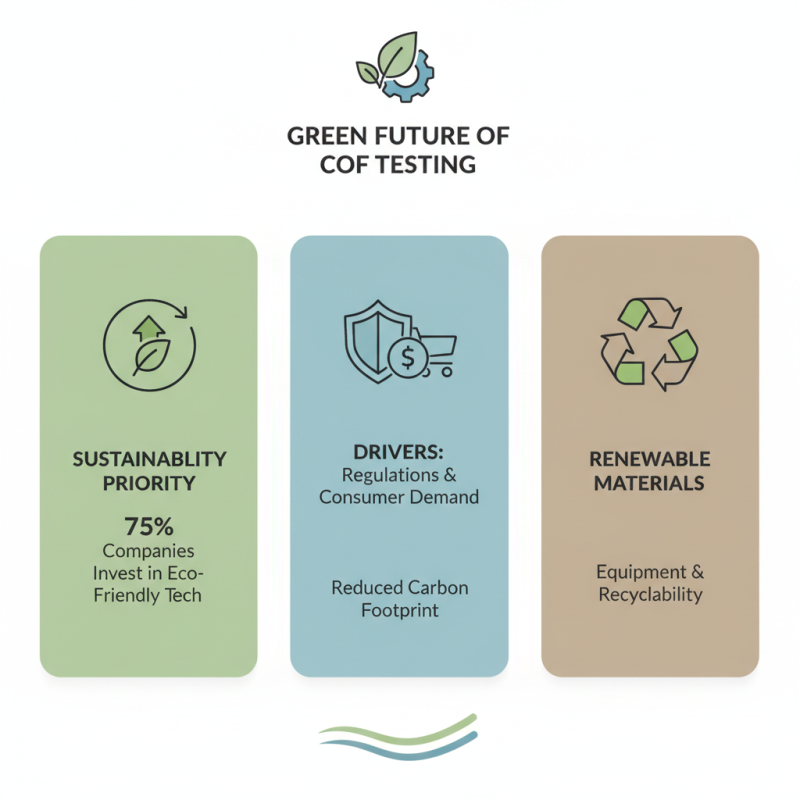
The development of Cof testing equipment is increasingly prioritizing sustainability. According to recent industry reports, about 75% of companies are investing in eco-friendly technologies. This shift is largely driven by regulatory demands and consumer expectations. Manufacturers are now exploring renewable materials for equipment production. These materials help reduce carbon footprints and enhance recyclability.
In 2026, the integration of smart technologies will further support sustainable practices. Data from the Global Testing Innovation Report highlights that over 60% of testing facilities are moving towards automated systems. These systems not only improve efficiency but also minimize waste and energy consumption. However, many companies still struggle to balance innovation and sustainability. The focus on cutting-edge technology sometimes overshadows eco-friendly practices.
Moreover, as the market grows, it's crucial to reflect on the long-term impacts of such a shift. Are the advancements genuinely leading to better environmental outcomes? Many organizations are still evaluating their sustainability metrics. There is a clear need for transparency in reporting. Only then can the industry ensure that progress is both innovative and environmentally responsible.
Future Challenges and Opportunities in Cof Testing Industry
The COF testing industry faces both challenges and opportunities as we approach 2026. As technology advances, the demand for more accurate testing equipment increases. However, existing solutions often struggle to keep pace with innovation. Many companies are still using outdated methods, which can lead to inaccuracies and inefficiencies. This gap creates an opportunity for new entrants to innovate and offer better solutions.
Tips: Regularly assess your current testing equipment. Identify areas where precision can be improved.
Another challenge is the need for real-time data. Many systems still rely on manual data collection. This slows down processes and complicates decision-making. Developing automated systems could enhance efficiency significantly. Enterprises must consider integrating AI-driven tools to streamline their workflows. The future belongs to those who adapt quickly.
Tips: Embrace automation where possible. It can save time and reduce errors.
As challenges arise, there are also opportunities for collaboration. Companies can benefit from partnerships that bridge technology gaps. Sharing resources with other firms can foster innovation. By working together, the COF testing industry can overcome obstacles and thrive. Engaging in open dialogues will lead to the sharing of insights and effective solutions.





 Home
Home