• facebook
  • youtube
  • linkedin
Leave Your Message

2026 How to Choose a Geotextile Water Permeability Tester

Choosing a Geotextile Water Permeability Tester in 2026 requires more than comparing prices and product photographs. The instrument must reproduce the hydraulic conditions expected in drainage layers, filtration systems, roads, or retaining structures. Water temperature, specimen thickness, applied head, and clamping pressure can change the measured result. Small differences matter.

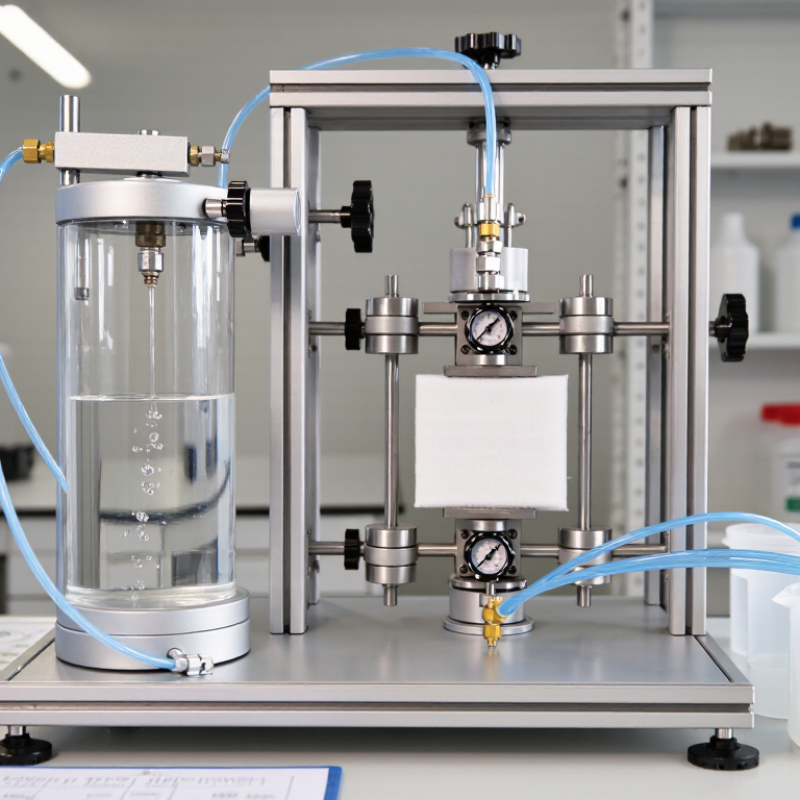
Dr. Jorge G. Zornberg, a recognized geosynthetics researcher, offers a practical principle: “Choose the test that answers the design question, not merely the one that is easiest to run.” This idea should guide every purchase decision. A reliable Geotextile Water Permeability Tester should support relevant procedures, such as ASTM D4491 or ISO 11058, while providing stable water flow and accurate pressure control. Look for corrosion-resistant contact parts, a transparent test chamber, adjustable hydraulic heads, and simple specimen alignment. These details become important when a wet sample slips under a clamp or air bubbles appear during testing.

Calibration records also deserve attention. Ask whether the manufacturer provides traceable verification, operating instructions, and responsive technical support. The best equipment is not always the most expensive. It is the equipment that produces repeatable data with your actual materials and staff. No instrument is perfect. Operators still need training, careful saturation, and disciplined observations. That uncomfortable point is easy to overlook. A tester may display precise numbers while the test preparation remains inconsistent. Therefore, this 2026 guide examines performance, compliance, usability, maintenance, and long-term reliability before recommending a Geotextile Water Permeability Tester.

2026 How to Choose a Geotextile Water Permeability Tester

What a Geotextile Water Permeability Tester Measures

What a Geotextile Water Permeability Tester Measures

A geotextile water permeability tester measures how easily water passes through a fabric under controlled pressure. It records the water flow rate through a known specimen area. The instrument can then calculate permeability under a defined hydraulic gradient. Some systems also report permittivity, which relates permeability to specimen thickness. That distinction matters.

In practical testing, the result depends on more than the sensor reading. The specimen must sit flat, without folds or edge leakage. Water should remove trapped air before measurement begins. Air bubbles matter. I check the clamp, seals, and pressure gauge before every test. A small leak can make a low-permeability fabric appear more open than it really is. Temperature also changes water viscosity, so reliable equipment should record or control it.

When choosing a tester, look for stable flow control, calibrated pressure sensors, and an adjustable testing head. The chamber should apply even loading without crushing the geotextile. Clear data logging helps compare samples from different production batches. I also prefer equipment that allows easy cleaning, because sediment can affect later readings. No test is perfectly clean. Operator handling still introduces uncertainty, especially during saturation and specimen cutting. A dependable report should include sample thickness, water temperature, pressure difference, flow rate, and test duration.

Key Standards for Selecting a Permeability Tester

Choosing a geotextile water permeability tester starts with the test standard, not the instrument price. ASTM D4491/D4491M defines constant-head and falling-head procedures for hydraulic conductivity. ISO 11058 measures water permeability normal to the geotextile plane. These methods are not interchangeable.

Check the intended property.

A tester for normal permeability needs stable water pressure, accurate flow measurement, and uniform specimen clamping. ISO 11058:2019 requires controlled hydraulic conditions and careful reporting of specimen thickness and test head. For drainage layers, ISO 12958 is also relevant because it evaluates in-plane water flow. The U.S. Federal Highway Administration’s NHI-07-092 guidance separates permittivity from transmissivity, a distinction often missed during equipment selection.

Look closely at repeatability. ASTM D4491/D4491M emphasizes specimen preparation, saturation, and flow stabilization. A small trapped air bubble can distort low-flow readings. The tester should record temperature, pressure, elapsed time, and flow volume. Manual readings may work for development tests, but they invite timing errors. Automation is useful, though not automatically accurate.

Ask for calibration records and uncertainty data. Verify whether the fixture supports the geotextile’s thickness and loading condition. A device may meet one standard yet fail another’s reporting requirements. That gap matters. Selection is sometimes imperfect; testing a reference specimen before purchase can reveal it.

Essential Tester Features and Technical Specifications

How to Choose a Geotextile Water Permeability Tester in 2026

A reliable tester should match the geotextile’s structure and expected flow range. Constant-head systems suit highly permeable fabrics. Falling-head systems can better measure slower drainage materials. The instrument should provide stable hydraulic pressure, accurate flow measurement, and a sealed specimen holder. Leaks around the sample can distort results more than small sensor errors.

Check the technical specifications carefully. Useful features include adjustable water temperature, a clear pressure display, digital data recording, and test-area control. A resolution of at least 0.1 mL may help with low-flow measurements. The test chamber should support common specimen diameters and prevent fabric wrinkling. Confirm that calibration certificates are traceable to recognized standards. Methods such as ISO 11058 or ASTM D4491 may guide your testing, but laboratory procedures still need careful interpretation. A perfect-looking reading can still be misleading.

Tips: Remove trapped air before testing. Condition specimens consistently. Record water temperature, thickness, pressure, and test duration. Inspect the gasket after every few tests. I have seen minor sealing damage create surprisingly high permeability values. That mistake is easy to miss. Also, avoid choosing a tester only because it offers more automation. Software cannot correct poor specimen preparation or an unsuitable hydraulic gradient. A practical tester should make abnormal readings visible, not simply produce attractive reports.

How to Compare Testing Accuracy, Usability, and Maintenance

Choosing a geotextile water permeability tester requires more than comparing advertised flow ranges. Accuracy depends on hydraulic head control, specimen clamping, temperature stability, and air removal. ASTM D4491/D4491M and ISO 11058 require permeability results to be linked with test conditions, not reported as isolated numbers. A useful instrument should record the hydraulic gradient clearly. It should also prevent edge leakage around the specimen. One small seal defect can make a stable sample appear unusually permeable.

Usability becomes visible during repeated testing. A clear chamber, tool-free specimen access, and automatic flow measurement reduce operator variation. ASTM D4491 commonly normalizes results as litres per square metre per second, while ISO 11058 uses permeability under a defined hydraulic gradient. Compare both the reading and the reporting format. FHWA’s Geosynthetic Design and Construction guidance emphasizes consistent laboratory control because site performance depends on repeatable material data. That point is easy to underestimate. Maintenance deserves equal attention: inspect seals weekly, clean the water path after muddy samples, and verify sensors with traceable references. A 2024 geosynthetics industry outlook from Grand View Research projects continued infrastructure demand, which means more laboratories may face higher testing volumes. In practice, the “fastest” tester can become inefficient if calibration takes too long. I would record drift, cleaning time, and failed tests for one month before deciding. The first choice may still be wrong.

2026 How to Choose a Geotextile Water Permeability Tester

Comparison of testing accuracy, usability, and maintenance based on commonly specified performance criteria for geotextile permeability testing.

Higher accuracy scores indicate better control of hydraulic head, flow measurement, and repeatability. Usability reflects setup time, automation, and result readability, while maintenance considers cleaning requirements, calibration effort, and replacement of wetted components. A balanced tester should provide stable measurements without creating excessive operating or maintenance workload.

A Step-by-Step Method for Choosing the Right Tester

Choosing a geotextile water permeability tester starts with the test question, not the catalog. Define whether you need normal permeability, permittivity, or in-plane flow. These tests use different fixtures, pressure ranges, and reporting units. Review the applicable project specification and test method before comparing instruments. A tester that looks versatile may still lack the correct clamp diameter or flow path. Measure the fabric thickness and expected head loss. Small details matter.

Next, check the hydraulic system step by step. Choose a stable water reservoir, readable pressure control, and a flow meter suited to low rates. The measuring range should cover dense and open structures without forcing extreme readings. Ask how the instrument handles air removal, specimen sealing, temperature, and water filtration. During laboratory work, trapped bubbles can create false resistance and irregular results. I would also inspect the test area, drainage, and calibration records before purchase. Not just the display.

Finally, compare repeatability, maintenance, data logging, and operator training. Request verification data from materials similar to yours, rather than accepting one ideal result. Check whether reference specimens can be tested regularly and whether replacement seals are accessible. A clear manual and traceable calibration often matter more than extra software features. Leave time for a trial run with your own geotextile. It may expose leaks, awkward loading, or a range that is too narrow. That inconvenience is useful. I would record every setting, including water temperature and conditioning time. Even a careful selection can need revision after real samples arrive.

2026 How to Choose a Geotextile Water Permeability Tester - A Step-by-Step Method for Choosing the Right Tester

Step Selection Question Key Data to Define Typical Requirement or Range Tester Feature to Choose Acceptance Check
1 Identify the test method Flow direction and hydraulic condition Usually normal-to-plane flow under a controlled constant or falling head A tester designed for normal permeability, with a stable water column and controlled head The operating principle matches the required project specification and laboratory procedure
2 Confirm the relevant standard Test standard, specimen dimensions, conditioning, and reporting units Common procedures use a defined specimen area, controlled water head, and measured flow rate Adjustable specimen holder, calibrated head measurement, and calculation of permeability or permittivity The user can reproduce every mandatory step without manual workarounds
3 Estimate the expected permeability Expected coefficient of permeability or permittivity of the geotextile Many geotextiles are highly permeable; measured values may vary by structure, thickness, and applied pressure A measurement range that covers both low-flow and high-flow specimens without overloading the sensor The expected result falls within the central portion of the instrument range rather than at its limit
4 Select the hydraulic head range Required hydraulic gradient or water head A low and stable head is generally preferred for sensitive geotextile flow measurements; the exact value depends on the procedure Fine head adjustment, low-pulsation water supply, and a readable pressure or water-level scale Head variation remains within the tolerance specified by the selected method during measurement
5 Choose the specimen holder size Exposed test area and specimen diameter Common laboratory fixtures use circular exposed areas of approximately 50 to 100 cm² Rigid, leak-resistant clamps with a defined exposed area and replaceable sealing components The exposed area is uniform, clearly defined, and not reduced by wrinkles or edge leakage
6 Check specimen thickness compatibility Material thickness, compressibility, and number of layers Thin nonwoven and woven geotextiles may require different sealing and compression arrangements Adjustable clamping gap, flat support screens, and controlled compression without damaging the fabric The specimen remains flat and fully sealed while its intended structure is preserved
7 Select the flow measurement system Flow rate, collection volume, and measurement resolution Flow should be measured over a suitable timed interval; very permeable materials may require higher collection capacity Graduated receiver, electronic flow sensor, or timed-volume collection with sufficient resolution Repeat readings agree within the laboratory's defined repeatability limit
8 Evaluate water quality and deaeration Water temperature, suspended solids, and trapped air Clean, temperature-recorded water is preferred; air bubbles can interrupt flow and distort results Reservoir, drain, venting, air-release points, and temperature monitoring No visible bubbles remain beneath the specimen, and water temperature is recorded with each test series
9 Decide on automation level Manual, semi-automatic, or computer-assisted operation Manual systems can suit occasional testing; automated systems reduce operator variation in routine laboratories Digital sensors, automatic stabilization, timed data capture, and automatic calculations The selected automation reduces handling errors without preventing manual verification
10 Verify accuracy and calibration Calibration of head, pressure, temperature, and flow measurement Calibration intervals should follow the laboratory quality system and instrument risk assessment Traceable calibration points, zero checks, verification records, and accessible adjustment procedures Calibration certificates and verification tools are available before routine use
11 Assess result recording Required output units and test information Typical records include specimen identification, exposed area, head, flow, temperature, thickness, and calculated result Data logging with export capability and fields for specimen conditioning and operator notes A complete test report can be generated without re-entering raw measurements manually
12 Review installation and maintenance Available bench space, drainage, cleaning, and replacement parts The instrument should be positioned on a stable, level surface with convenient access to water and drainage Corrosion-resistant wetted parts, easy cleaning, replaceable seals, and accessible tubing Routine cleaning and seal replacement can be completed without disassembling the main frame
Final Selection Rule Choose the tester that covers the required test method, specimen size, hydraulic head, expected flow range, measurement accuracy, calibration needs, and reporting requirements without operating at the extreme limits of its range.