• facebook
  • youtube
  • linkedin
Leave Your Message

Why Choose an Air Permeability Tester?

Choosing an Air Permeability Tester can turn invisible airflow into measurable production data. It helps manufacturers evaluate how easily air passes through textiles, paper, filters, membranes, and other porous materials. This information supports product development, quality control, and process consistency. A fabric sample may look uniform under ordinary lighting, yet its airflow resistance can vary across the roll.

A reliable tester applies controlled pressure and records the air volume moving through a defined test area. Experienced technicians use these readings to compare materials, identify production changes, and investigate unexpected defects. For example, a filter may show reduced permeability after coating, while a textile may become less breathable after finishing. Small differences can affect comfort, filtration performance, drying speed, and energy use.

The instrument alone is not enough. Calibration, specimen preparation, clamping pressure, and environmental conditions can influence results. Poor handling may create false confidence. A number can look precise and still mislead. That is why responsible laboratories follow recognized methods, document test conditions, and repeat questionable measurements. Operators should also understand the material’s purpose before judging whether a result is acceptable. In practice, choosing the right Air Permeability Tester means matching pressure range, test area, accuracy, software, and sample type. Cost matters, but dependable data matters more. Some testing decisions remain imperfect, especially when materials behave differently across batches. Careful review keeps those limitations visible. With qualified equipment and trained users, air permeability testing becomes a practical foundation for trustworthy material decisions.

Why Choose an Air Permeability Tester?

What Is an Air Permeability Tester?

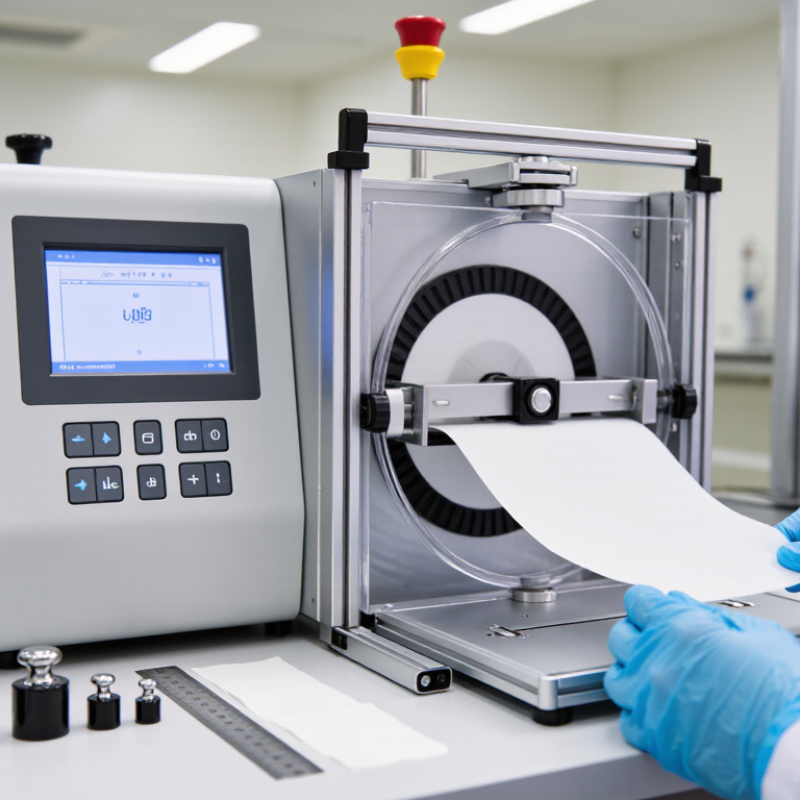
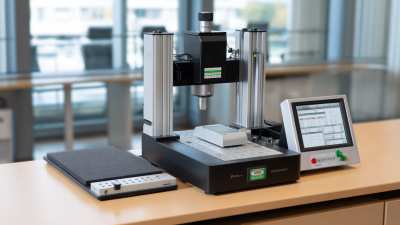
An air permeability tester is a precision instrument that measures how easily air passes through a material. It usually contains an air pump, test chamber, pressure sensor, and clamping system. The operator places a fabric specimen over the opening, applies a controlled pressure difference, and records the airflow.

For textiles, ISO 9237 commonly uses a 100 Pa pressure difference for clothing fabrics. Industrial fabrics may use 200 Pa. ASTM D737 specifies a 125 Pa test pressure for many textile evaluations. These values make results more comparable across laboratories, though they do not remove every testing problem. Material thickness, moisture, seam structure, and surface roughness can influence the reading.

In practical testing, a loose clamp may allow air to escape around the specimen. That result can look precise but describe the fixture, not the fabric. A reliable tester helps quality teams compare rolls, verify process changes, and investigate comfort or filtration performance. The displayed value is often expressed as airflow per unit area, such as cubic feet per minute per square foot or litres per square metre per second.

The instrument is not a magic answer.

Operators still need conditioning, repeat measurements, and careful sample placement. ISO and ASTM methods provide structure, but laboratory discipline determines whether the data deserves trust. A good test therefore combines calibrated equipment, documented settings, and experienced judgement.

How Does an Air Permeability Tester Work?

An air permeability tester measures how easily air passes through a porous material. It is used for textiles, filter media, paper, and technical fabrics. The instrument clamps a prepared specimen over a defined test opening. A pump creates a controlled pressure difference across the sample. Air then moves through its pores. The device measures the resulting flow rate and displays permeability in standardized units.

The working process depends on stable pressure, accurate area, and a sealed fixture. An operator places the material flat, removes wrinkles, and checks that the gasket contacts evenly. The tester compares airflow against a calibrated reference system. If the pressure is set too high, delicate fibers may deform and distort the reading. If the seal leaks, the result may appear higher than the material’s actual permeability. Small details matter.

Reliable testing also requires conditioning samples before measurement. Temperature and humidity can change fiber swelling, coating behavior, and pore size. Repeating measurements at several locations reveals uneven production. One reading is rarely enough. That assumption is not always safe. Experienced technicians record specimen direction, thickness, pressure level, and visible defects. They also inspect the instrument regularly, because calibration drift can remain unnoticed. A useful result is a traceable measurement with clearly recorded test conditions.

Which Materials Require Air Permeability Testing?

Air permeability testing matters wherever air must pass through a material at a controlled rate. Common examples include woven fabrics, knitted fabrics, nonwovens, filter media, paper, geotextiles, medical garments, and building membranes. Textile Exchange’s Materials Market Report 2024 estimates global fiber production reached 124 million tonnes in 2023. With production projected to approach 160 million tonnes by 2030, consistent airflow evaluation is becoming more important.

Nonwovens used in hygiene products and protective clothing need balanced breathability and barrier performance. Filter media require testing because excessive airflow may reduce particle capture, while restricted airflow can increase pressure drop. Paper manufacturers also measure permeability for packaging, printing, and controlled drying processes. ISO 9237 and ASTM D737 are widely used for textile air permeability measurements, but laboratories must select the method carefully. Different pressure settings can produce different results.

It is not only about fabric comfort. A geotextile with uneven pores may drain unpredictably. A membrane can pass laboratory testing yet behave differently after bending or moisture exposure. That is the uncomfortable part. Test data is useful, but it is never the whole product story. Experienced technicians should control conditioning, specimen location, pressure, and calibration. Small variations can change the final reading.

Why Choose an Air Permeability Tester? - Which Materials Require Air Permeability Testing?

Material Category Typical Products Why Air Permeability Testing Is Required Key Measurement Common Test Method or Standard Typical Reporting Unit
Woven and Knitted Textiles Apparel fabrics, sportswear, outdoor fabrics, upholstery, and technical textiles To evaluate breathability, ventilation, comfort, wind resistance, and consistency between fabric lots. Airflow through a defined test area under a specified pressure difference ISO 9237; ASTM D737 L/m²/s or ft³/min/ft²
Nonwoven Fabrics Hygiene materials, wipes, filtration media, medical gowns, masks, and disposable fabrics To control porosity, support filtration design, and verify uniformity in spunbond, meltblown, spunlace, and needlepunch structures. Air permeability across the nonwoven web at a controlled pressure drop ISO 9237; ISO 9073-15; ASTM D737, where applicable L/m²/s or m³/m²/min
Paper, Tissue, and Paperboard Printing paper, packaging paper, tissue, filter paper, and coated board To assess formation, porosity, coating coverage, printability, drying behavior, and resistance to air passage. Airflow or the time required for a specified volume of air to pass through the specimen ISO 5636-3; ISO 5636-5; ASTM D726, depending on the instrument and product requirement mL/min, s/100 mL, or Gurley seconds
Porous Plastic Films and Membranes Breathable packaging films, protective membranes, venting films, and microporous sheets To verify pore structure, ventilation performance, pressure equalization, and protection against liquid or particulate penetration. Airflow rate or air leakage through the membrane under a controlled pressure difference Product-specific internal procedures or validated methods based on ISO 5636-3 and applicable packaging requirements L/m²/s, m³/m²/s, or pressure-dependent leakage rate
Filter Media Air filters, cabin filters, dust collectors, vacuum filters, and industrial filtration media To balance filtration efficiency, pressure drop, energy consumption, service life, and airflow capacity. Airflow resistance, pressure drop, and air velocity through the filter media ISO 5011 for certain intake air-cleaner assemblies; ISO 16890 for general air-filter classification and performance evaluation Pa, kPa, m³/h, or m/s
Open-Cell Foams Flexible polyurethane foam, acoustic foam, cushioning foam, and air-permeable seals To characterize cell openness, acoustic behavior, cushioning response, and resistance to airflow. Airflow through a defined thickness and test area under a specified pressure differential ASTM D3574, Test H, for flexible cellular materials where applicable L/s or ft³/min
Building Materials and Airtight Membranes Air barriers, membranes, wall components, insulation systems, and construction panels To evaluate airtightness, energy efficiency, moisture-control design, and resistance to uncontrolled air leakage in buildings. Air permeability of the material or component under a range of pressure differences EN 12114 for air permeability of building materials and products m³/(m²·h) or m³/(m²·s)
Protective and Industrial Clothing Chemical protective garments, cleanroom clothing, workwear, and heat-management fabrics To balance wearer comfort and ventilation with the required barrier performance of the garment material. Air permeability through the fabric or assembled material ISO 9237 or ASTM D737 for textile components; additional product-specific barrier tests may also be required L/m²/s or ft³/min/ft²
Porous Ceramics and Sintered Components Porous ceramic filters, sintered metal parts, vent plugs, and gas-permeable components To verify connected porosity, flow capacity, process consistency, and suitability for gas or liquid filtration. Gas flow rate through the component at a defined pressure difference Validated product-specific methods are commonly used because geometry, thickness, pore structure, and application vary considerably L/min, m³/h, or pressure drop in Pa or kPa
Important: The selected test pressure, specimen conditioning, test area, thickness, airflow direction, and reporting unit should be agreed with the applicable product specification or test standard before testing.

What Are the Main Benefits of Using One?

The main benefit is control. An air permeability tester turns invisible airflow into a measured value. Under ISO 9237 or ASTM D737 conditions, a clamp holds the specimen while controlled pressure drives air through it. The result helps technicians compare fabric lots, coatings, filter media, and breathable protective materials. No guesswork. A stable reading can reveal blocked pores, uneven finishing, or a loose weave before shipment.

Textile Exchange’s 2024 Materials Market Report estimated global fiber production at 124 million tonnes in 2023. At that scale, early detection can reduce rejected rolls, repeated testing, and avoidable material waste. The European Environment Agency reported EU textile consumption of about 6.9 million tonnes in 2019, or roughly 15 kilograms per person. That volume makes consistency more than a laboratory preference. It affects comfort, drying, filtration, and process decisions.

There is also a practical traceability benefit. An engineer can log pressure, test area, specimen location, and conditioning time for audits or supplier discussions. Small details matter. Yet the tester is not magic. Leaks, poor clamping, dirty test heads, or inconsistent conditioning can distort results. Operators should verify calibration and repeat borderline readings. I would not treat one impressive number as proof of quality. A short test record, tied to a real production lot, is more useful.

Why Choose an Air Permeability Tester?

Main benefits include repeatable testing, objective material comparison, quality control, and better process optimization.

Air permeability testers measure the airflow passing through a material under a controlled pressure difference. Common test methods use different pressure settings, so results should only be compared when the test standard, pressure differential, test area, and conditioning requirements are equivalent.

  • Repeatability: Controlled pressure and test conditions reduce operator-dependent variation.
  • Objective comparison: Materials can be evaluated using a defined airflow measurement.
  • Quality control: Testing helps identify changes caused by fiber, yarn, construction, coating, or finishing.
  • Process optimization: Measured permeability supports decisions about breathability, filtration, and barrier performance.

Reference conditions shown: ISO 9237 uses 100 Pa for clothing fabrics and 200 Pa for industrial fabrics; ASTM D737 commonly uses 125 Pa. Actual laboratory procedures may include additional requirements.

How to Choose the Right Air Permeability Tester?

Why Choose an Air Permeability Tester?

How to Choose the Right Air Permeability Tester?

Choosing an air permeability tester starts with the material, not the instrument’s appearance. Paper, woven fabric, nonwoven sheets, and filtration media may require different test pressures and measurement ranges. Check the applicable standard for your product. A suitable tester should support the required test area, airflow range, and pressure conditions.

Think about daily use. An operator may test dozens of samples beside a production line. Clear controls, stable clamping, and quick data recording reduce avoidable errors. I have found that a strong seal matters as much as sensor accuracy. A small gap can produce a convincing but incorrect result. It is easy to overlook this during routine testing.

Calibration is another practical concern. Ask whether the instrument supports traceable calibration and regular verification. Review its repeatability data under real laboratory conditions, not only ideal settings. Temperature, humidity, sample thickness, and surface texture can affect readings. The tester should also store results securely and export them in a useful format.

Do not choose the widest range automatically. An oversized range may reduce sensitivity for delicate materials. A narrow range can become frustrating when product specifications change. Leave room for future testing, but keep the primary measurement close to the instrument’s best operating area. When comparing models, request sample tests with your own materials. That step may reveal handling problems that brochures never mention.