Home
Choosing the best Friction Peel Tester from China requires more than comparing prices, photos, or factory claims. The right instrument should produce repeatable results under controlled conditions. It must also match your testing materials, peel angles, load ranges, and production goals. A laboratory testing adhesive film may need different features from a packaging manufacturer checking seal performance.
This guide examines Chinese suppliers through practical and technical considerations. These include sensor accuracy, motor stability, fixture design, software usability, calibration support, and after-sales communication. Experience with real testing matters here. A smooth touchscreen cannot compensate for unstable pulling speed or poorly aligned samples. Small details often affect results, such as a wrinkled strip, uneven coating, or a loose clamp.
Reliable manufacturers should provide technical specifications, calibration records, operating instructions, and clear sample-testing procedures. They should also explain how their equipment supports relevant methods, such as ASTM or ISO procedures, where applicable. However, standards may not fully reflect every application. That limitation deserves attention.
The “best” model is not always the most expensive one. A compact tester may suit routine quality control, while a stronger system may serve research laboratories. Buyers should request demonstration videos, test data, and reference samples before placing an order. Communication quality is also evidence of supplier reliability. If answers remain vague, investigate further.
There is no perfect choice.
A careful comparison can reduce costly retesting, improve batch consistency, and support confident purchasing decisions. This article offers a balanced framework for evaluating China-made Friction Peel Tester options, including their strengths, weaknesses, and areas requiring further verification.
What Is the Best Friction Peel Tester from China?
What Is a Friction Peel Tester?
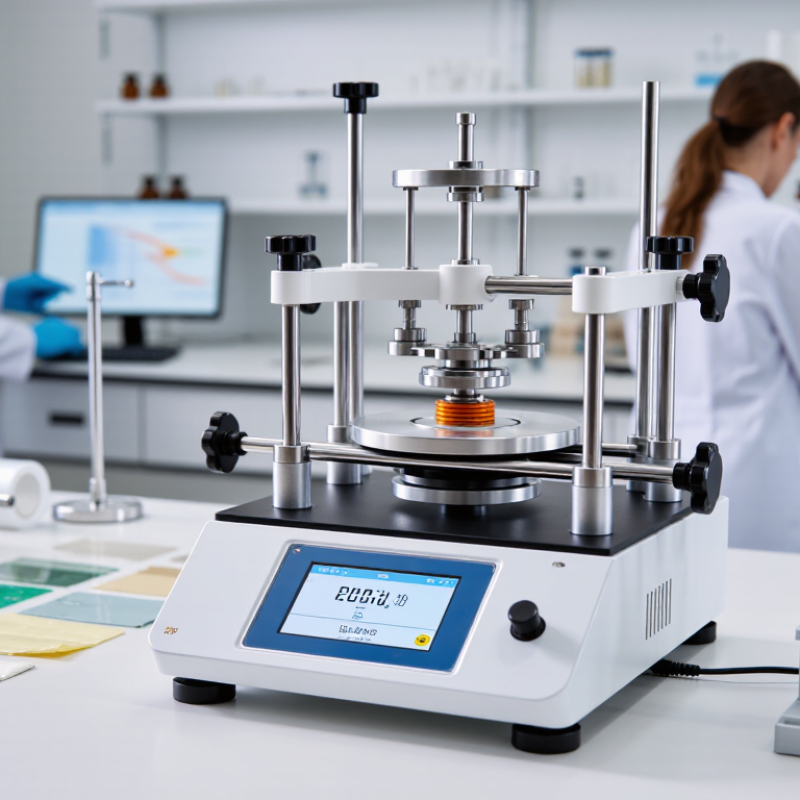
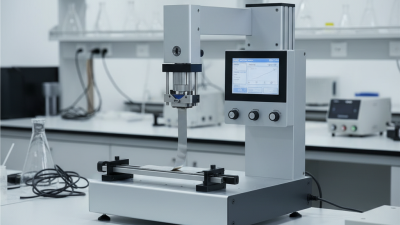
A friction peel tester measures the force needed to separate two bonded or sealed material layers. It usually controls peeling speed, angle, and clamping pressure. The instrument then records peak force, average force, and displacement. These values help engineers compare films, laminates, labels, and flexible packages.
The term “friction peel tester” is not a universal standard name. Some instruments combine peel testing with coefficient-of-friction measurement. ASTM F88/F88M focuses on seal strength, while ASTM D1894 evaluates static and kinetic friction. Selecting the wrong test method can produce attractive but misleading numbers. That distinction deserves attention.
Market pressure makes repeatable testing more important. Smithers’ The Future of Global Flexible Packaging to 2029 report places the sector on a path toward roughly US$300 billion by 2029. Grand View Research reports a global flexible packaging market value above US$230 billion in 2023, with continued growth expected. These estimates use different definitions, so they should not be treated as identical.
For Chinese sourcing, inspect the load-cell range, speed accuracy, software export, and calibration traceability. Request test data using your actual film structure. Ask whether the supplier follows ISO/IEC 17025 calibration practices. A stable result matters more than a polished screen.
Small details matter.
I would not select a tester from price alone. Test angle, peel speed, humidity, and specimen width can change the result. An independent repeatability check may reveal weaknesses before production begins.
| Evaluation Dimension | Recommended Specification or Feature | Why It Matters | Relevant Test Methods | Typical Applications |
|---|---|---|---|---|
| Peel Test Angle |
90° peel
180° peel
The instrument should support a stable, accurately controlled peel angle. |
Peel angle changes the measured force and must match the selected procedure. A tester that supports both angles is more versatile. | ASTM D3330, PSTC-101, FINAT FTM 1, ISO 8510-2 | Pressure-sensitive tapes, labels, films, protective coatings, and flexible packaging materials |
| Force Measurement | Interchangeable load cells selected according to the expected force range, with digital force recording and peak-force detection. | The load cell should be suitable for the specimen so that the measured force remains within an accurate and useful part of its capacity. | Applicable to most instrumented peel-test procedures | Low-force labels and tapes, medium-strength laminates, and higher-strength bonded materials |
| Crosshead Speed | Programmable constant speed, commonly covering approximately 1 to 500 mm/min, depending on the instrument configuration. | Peel force is affected by test speed. A controlled speed improves repeatability and allows the operator to follow the required standard. | ASTM D3330 and other procedures specifying a defined separation rate | Adhesive tapes, labels, laminates, medical dressings, and seal-strength-related development work |
| Specimen Width | Fixtures suitable for commonly used specimens such as 12 mm, 19 mm, 25 mm, and 50 mm wide strips, subject to the selected method. | Specimen width influences the reported force. A suitable fixture helps maintain alignment and prevents edge damage. | ASTM D3330, PSTC-101, FINAT methods | Single-coated tape, double-coated tape, label stock, and flexible packaging laminates |
| Grip and Fixture Design | Adjustable clamps with parallel gripping surfaces, smooth sample loading, and sufficient clearance for the backing and substrate. | Slippage, bending, or misalignment can create artificially high or low readings and increase test variation. | Method-dependent; fixture geometry should follow the selected standard | Tapes, films, paper labels, foil laminates, fabrics, and coated substrates |
| Travel and Working Stroke | A powered travel system with enough stroke for the required peel length, commonly at least 100 mm for routine laboratory testing. | Adequate travel allows a consistent peel distance while keeping the specimen and fixture safely within the test area. | Procedure-specific; verify the required peel length before purchase | Quality control, product comparison, research, and formulation development |
| Data Acquisition | Real-time force-versus-distance curve, average peel force, peak force, minimum force, test speed, and exportable results. | The force curve can reveal unstable adhesion, cohesive failure, substrate deformation, and sudden release events that a single value may hide. | Useful for standard testing and internal quality-control procedures | Adhesive development, process validation, incoming inspection, and failure analysis |
| Calibration and Verification | Traceable force calibration, zero-force adjustment, verification using certified weights or reference devices, and documented calibration records. | Regular verification helps maintain measurement reliability and supports laboratory quality systems. | Laboratory procedures based on applicable ASTM, ISO, FINAT, or PSTC requirements | Accredited laboratories, production quality control, supplier qualification, and audit preparation |
| Environmental Control | Compatibility with conditioning at controlled temperature and relative humidity, with specimen conditioning performed before testing when required. | Adhesive performance can change significantly with temperature, humidity, dwell time, and backing material. | ASTM D3330 and related procedures that specify conditioning requirements | Pressure-sensitive adhesives, medical products, packaging materials, and climate-sensitive films |
| Failure Observation | Clear viewing area and the ability to record failure mode, such as adhesive failure, cohesive failure, backing failure, or substrate separation. | The numerical peel result should be interpreted together with the actual failure mode. | Applicable to peel adhesion and laminate-separation evaluations | Adhesive research, packaging development, troubleshooting, and material qualification |
| Reporting Unit | Force reported as N/width, such as N/25 mm, or in another unit required by the selected method. | Reporting force per unit width makes results more comparable when specimen widths differ. | ASTM, ISO, FINAT, and PSTC methods may specify different reporting conventions | Technical specifications, certificates of analysis, laboratory reports, and customer validation |
| Best General-Purpose Configuration | A motorized universal tester with programmable speed, interchangeable load cells, 90° and 180° fixtures, digital curve capture, and exportable test reports. | This configuration provides the flexibility needed for routine tape, label, film, laminate, and adhesive testing without relying on a single test setup. | Select the exact fixture and procedure according to the material and applicable standard. | Research laboratories, packaging plants, adhesive manufacturers, converters, and inspection services |
What Is the Best Friction Peel Tester from China?
Packaging demand is rising, increasing the need for repeatable adhesion and sliding measurements. Smithers’ 2024 packaging study forecasts the global packaging market could exceed 1.2 trillion dollars by 2028. Pressure-sensitive materials need tighter quality control. A friction peel tester helps convert that need into measurable force data.
How does a friction peel tester work? The operator fixes a film, label, or coated sample onto a smooth test plate. A controlled load presses the sample against the surface. A motor then pulls it at a selected speed. The load cell records resistance during peeling or sliding. Software calculates peel force, friction force, and coefficient of friction using μ = F/N. ISO 8510-2 and ASTM D3330 commonly specify 180-degree peel testing at 300 millimeters per minute. ASTM D1894 supports coefficient-of-friction testing for plastic films.
The instrument sounds simple. It is not always forgiving. Misaligned samples can create uneven force peaks. Dust, humidity, and adhesive aging also change the result. A 2023 technical review in Packaging Technology and Science reported that environmental conditioning can noticeably affect flexible-film adhesion results. I would inspect the roller, verify the calibration load, and test at least five specimens. A Chinese-made unit should provide traceable calibration records, adjustable speed control, and raw-force data. A low purchase price is useful only when the readings remain repeatable.
The best Chinese friction peel tester is defined by measurable control, not polished housing. In daily laboratory work, stable results matter more than a crowded screen. The instrument should combine adjustable peel speed, a low-capacity load cell, replaceable fixtures, and automatic friction-coefficient calculation. It should also support peel testing under ASTM F88/F88M and friction testing under ASTM D1894 or ISO 8295.
Repeatability is critical. A 0.01 N display resolution helps detect small changes in seal strength, but resolution alone proves little. Ask for calibration records, traceable reference weights, and repeatability data from at least ten specimens. A useful system should export raw force-distance curves, not only final averages. Humidity control matters, too. Film can curl beside a warm sealing bar. That small detail can distort the result.
Market pressure makes these features practical. Grand View Research valued the global flexible packaging market at about USD 268 billion in 2023 and expects continued growth through 2030. More packaging laboratories therefore need faster, comparable measurements. A Chinese tester with programmable speed, temperature compensation, emergency stopping, and bilingual software can fit that demand. Remote diagnostics are valuable, although they are not always reliable. I would still prefer clear manuals and accessible spare parts. The weakest point may be overlooked calibration after fixture replacement. That deserves more attention.
The best Chinese friction peel tester should combine accurate force measurement, stable test speed, precise peel-angle control, reliable calibration, flexible fixtures, and traceable digital data.
The chart uses a neutral 100-point evaluation model rather than company or brand data. Measurement accuracy and repeatable motion receive the highest weights because they directly influence peel-force results and laboratory repeatability.
Comparing Chinese friction peel tester manufacturers requires more than checking the quoted price. Start with the measurement system. Ask about load cell capacity, peel angle accuracy, pulling speed control, and force resolution. A suitable tester should maintain stable motion during a 180-degree peel test. Small speed changes can affect adhesive results.
Request calibration records with traceable references. Confirm whether the supplier follows relevant methods, such as ASTM D3330 or ISO 8510, when applicable. Then inspect the machine physically. Does the clamp hold a narrow tape strip without slipping? Is the carriage smooth at low speed? Ask for raw data from several repeated tests, not only a polished product video. Three samples can reveal poor repeatability.
Software deserves equal attention. Check whether it exports force curves, peak values, average peel force, and test reports in common formats. Chinese manufacturers may offer strong customization, but unclear specifications can create delays. Discuss sample width, fixture design, voltage, language settings, installation, and spare parts before ordering. A factory audit or live online demonstration adds useful evidence.
Do not choose the cheapest option automatically. A low initial cost may hide weak calibration support or expensive replacement parts. I would also question impressive accuracy claims without uncertainty data. That is an easy detail to miss. Compare warranty response times, technician availability, and documentation quality. Sometimes the best supplier is not the most polished one, but the one that explains limitations clearly and accepts reasonable testing conditions.
What Is the Best Friction Peel Tester from China?
Choosing a friction peel tester starts with evidence, not a catalogue photograph. ASTM D1894 defines procedures for static and kinetic friction testing, while ASTM D3330 supports peel adhesion evaluation. Ask the supplier to state the exact standard, test speed, load range, peel angle, and environmental conditions. A credible factory should provide calibration certificates traceable to ISO/IEC 17025 laboratories. Inspect the load cell, film clamp, carriage rail, and emergency stop physically. Small alignment errors can distort results.
Industry reports also show why repeatability matters. Smithers’ 2024 packaging outlook values the global packaging market above one trillion US dollars, with flexible packaging remaining a major segment. In this environment, a difference of 0.02 in coefficient of friction may affect machine feeding, sealing, and waste levels. Request raw data from at least ten repeated tests. Compare the average, standard deviation, and operator variation. Do not accept only a polished PDF report.
After-sales support deserves equal attention. Confirm software updates, spare-part availability, remote diagnostics, and response times in writing. Request a sample test before purchase, using your own films or coated materials. I once focused too heavily on instrument resolution and underestimated fixture replacement time. That was a practical mistake. A lower-cost tester may become expensive when technical support crosses time zones. Check installation training, annual calibration options, and whether the supplier can investigate abnormal curves instead of merely sending a manual. Test the support team before signing.